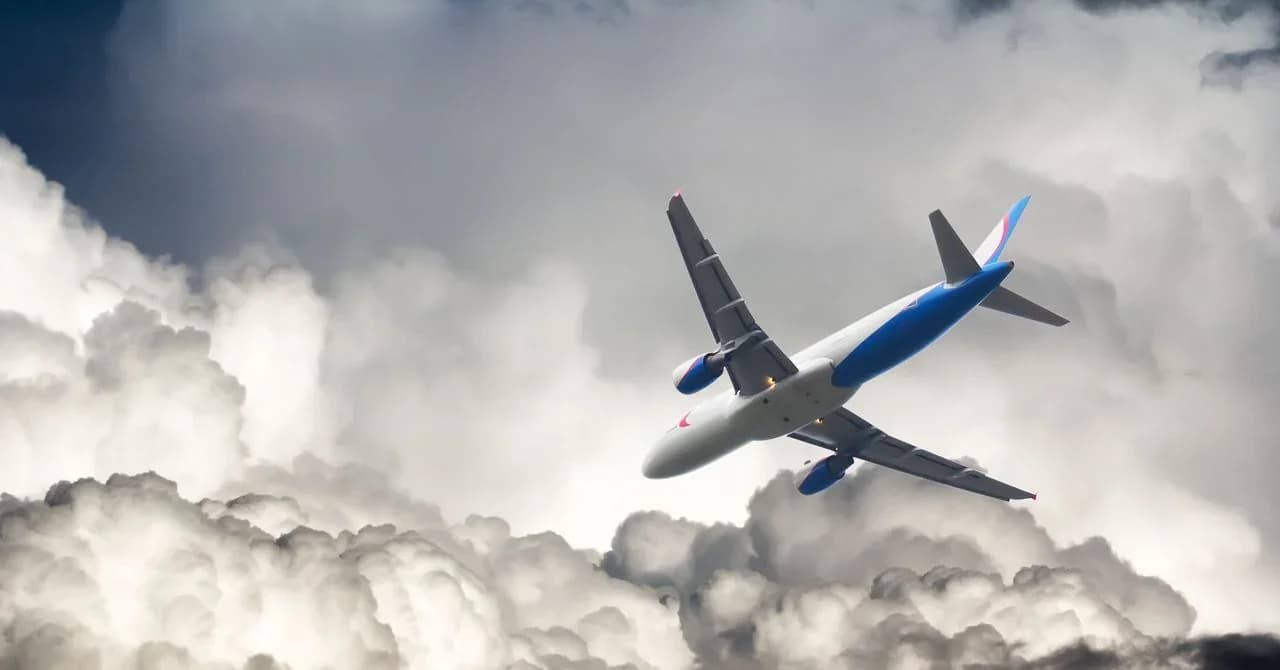
Researchers and the aviation industry are using large datasets and machine learning to forecast turbulence before aircraft encounter it, Wired reports. Michael Murillo, a professor at Michigan State University, described turbulence as the hardest unsolved problem in classical physics.
According to the FAA, more than 200 people were seriously injured because of turbulence on US aircraft between 2009 and 2023. Experts said climate change is altering atmospheric conditions around jet streams, increasing turbulence that is difficult to see and predict.
Larry Cornman, a physicist at the National Center for Atmospheric Research, found that the position, altitude and speed data aircraft are required to transmit can be used to detect unexpected turbulence. The approach does not require any new equipment or software on board.
In September, the National Science Foundation awarded $30 million to nine universities to establish a new center focused on turbulence prediction. The center, called Tempest and led by Murillo, will study turbulence in the air, in plasma inside fusion reactors and in cosmic gas clouds.
Commercial tools are already in use. Tel Aviv-based SkyPath collects anonymized data from accelerometers in pilots' tablets and warns of turbulence 10 to 15 minutes in advance; its app is installed on more than 40,000 devices and used by several major airlines, including American Airlines. Cornman cautioned, however, that forecast accuracy of 80 to 100 percent will not be achieved any time soon.
Source: Wired
Next story