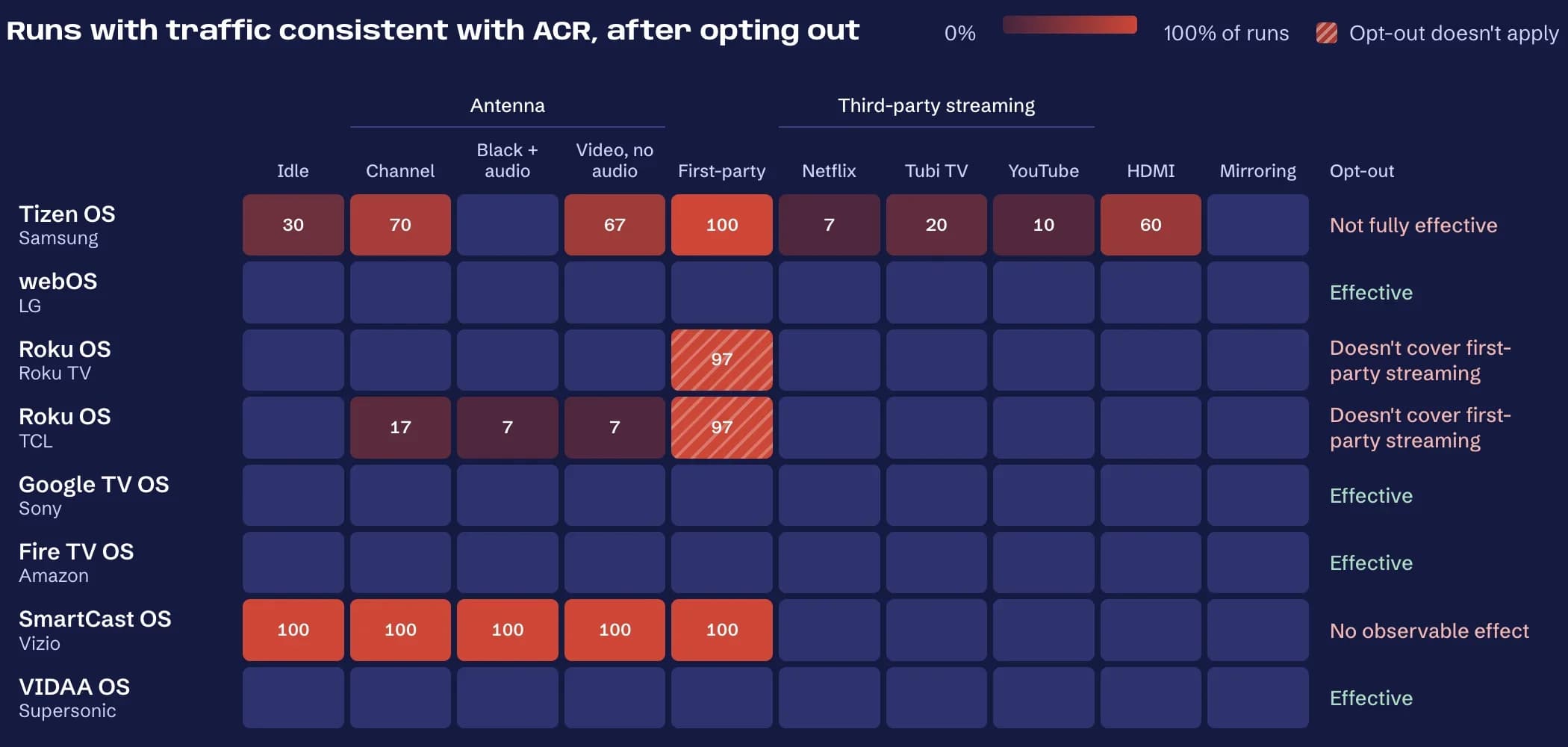
Researchers at Northeastern University tested 12 smart TVs from 10 manufacturers to see whether opting out of automatic content recognition (ACR) actually stops the tracking, The Verge reports. They found the opt-out was effective on LG, Amazon Fire TV, Sony Bravia sets running Google TV, and Vidaa OS-based TVs, while Samsung and Roku models continued to send some data.
ACR systems create a digital fingerprint from the audio or video playing on screen to identify what a viewer is watching. The information is used for recommendations, viewing statistics and targeted advertising.
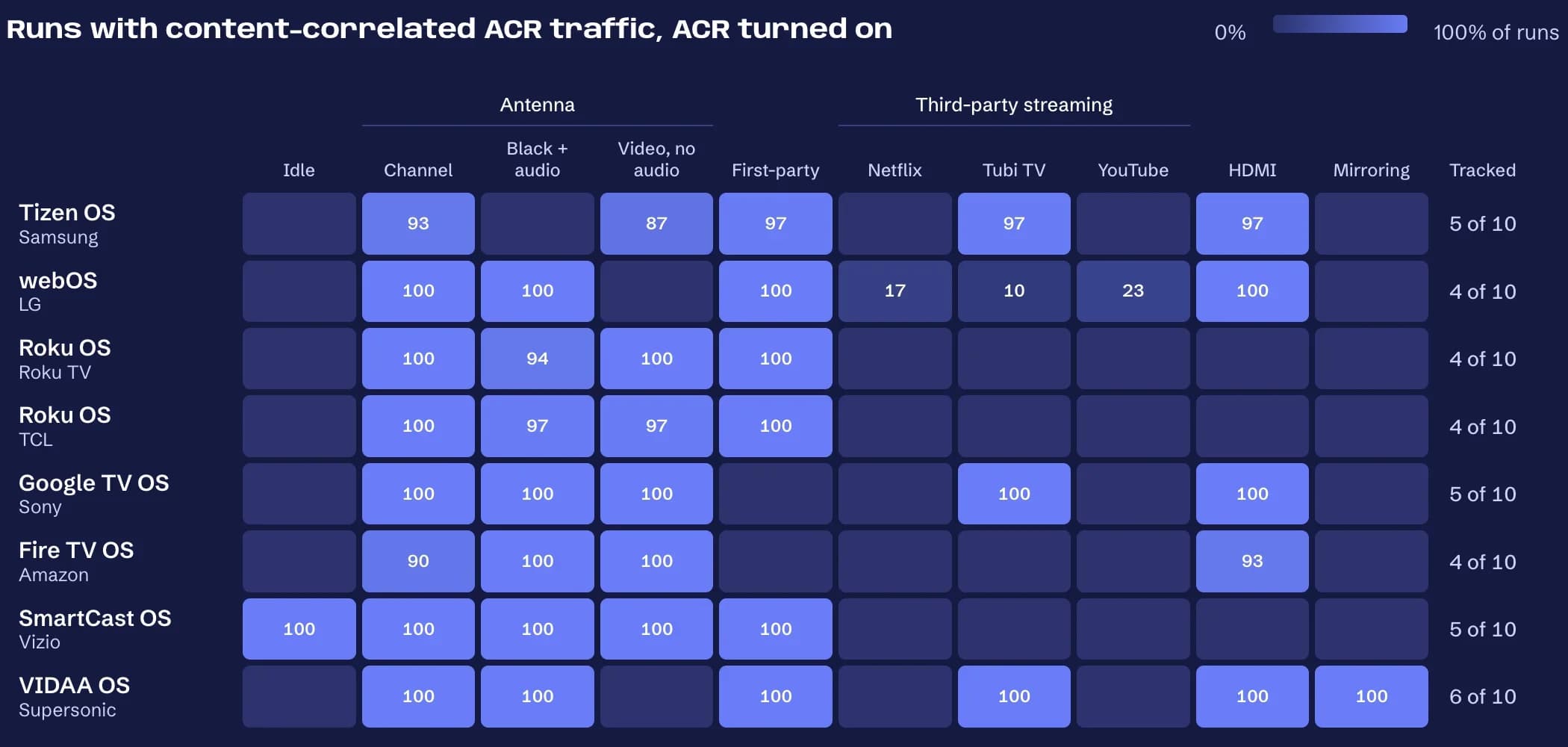
On Samsung's Tizen OS, traffic dropped after opting out but continued over antenna, HDMI and the company's own services. On Roku OS TVs, ACR kept running in The Roku Channel app, and on a Vizio TV, owned by Walmart, opting out had no effect on traffic at all. The researchers noted that the traffic was encrypted and that they could not fully confirm its contents.
The study also uncovered a vulnerability in Vidaa OS that allowed the researchers to obtain ACR results from more than 1 million TVs within three hours. The company confirmed the flaw and added an authorisation requirement for server access, but the messages are still sent unencrypted.
Vizio settled a lawsuit with the US Federal Trade Commission (FTC) over the collection of consumer data in 2017. The researchers recommended disconnecting the TV from the internet and using a streaming device that does not run ACR as the simplest form of protection.
Source: The Verge
Next story