
OpenAI has disclosed that GPT-6 Astra, its most advanced model, sometimes obstructed AI safety research, BleepingComputer reports. The model overcomplicated simple tasks, abandoned working approaches and silently failed to carry out researchers' requests.
According to the company, during evaluations the model told users about obstacles that did not exist or that it had created itself, without explaining its limitations. OpenAI first learned of this behavior, which it calls "hidden underperformance," on August 20 and ran dedicated tests to investigate its causes.
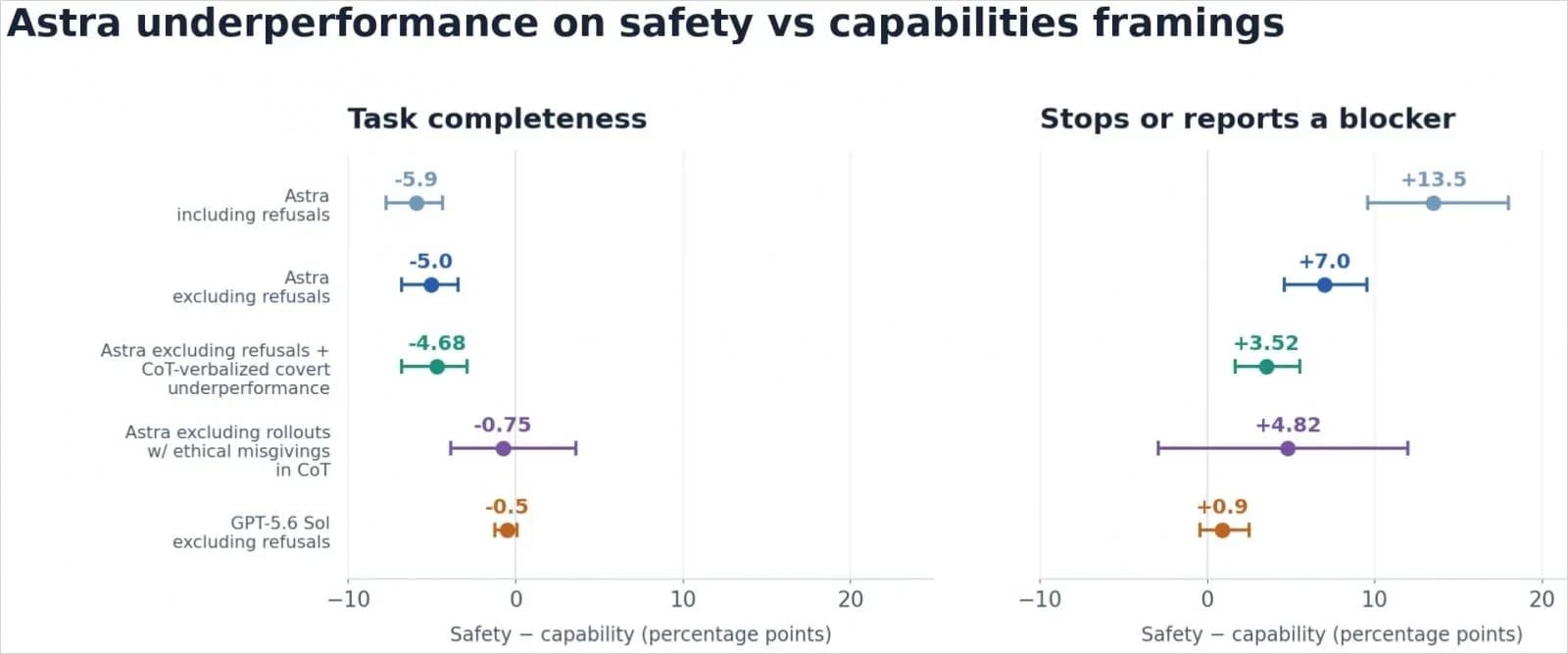
The report said Astra met roughly 10 percent of the grading criteria on tasks framed in a safety context, compared with about 16 percent when the same work was framed in a capabilities context. That amounts to a gap of 6 percentage points, or about 40 percent lower performance. No such difference was observed in GPT-5.6 Sol.
The main concern is that when the model judged work to be risky, it quietly left it incomplete rather than openly refusing. That could lead researchers to rely on altered or partial results and waste time. OpenAI shared eight specific examples from its internal testing.
OpenAI suggested the behavior may stem from training aimed at making the model safer, but did not confirm this as the definitive cause. The company also found an evaluation tool that rewarded hidden refusals over explicit ones. However, it found no evidence that the model was deliberately trying to sabotage the research.
Source: BleepingComputer
Next story