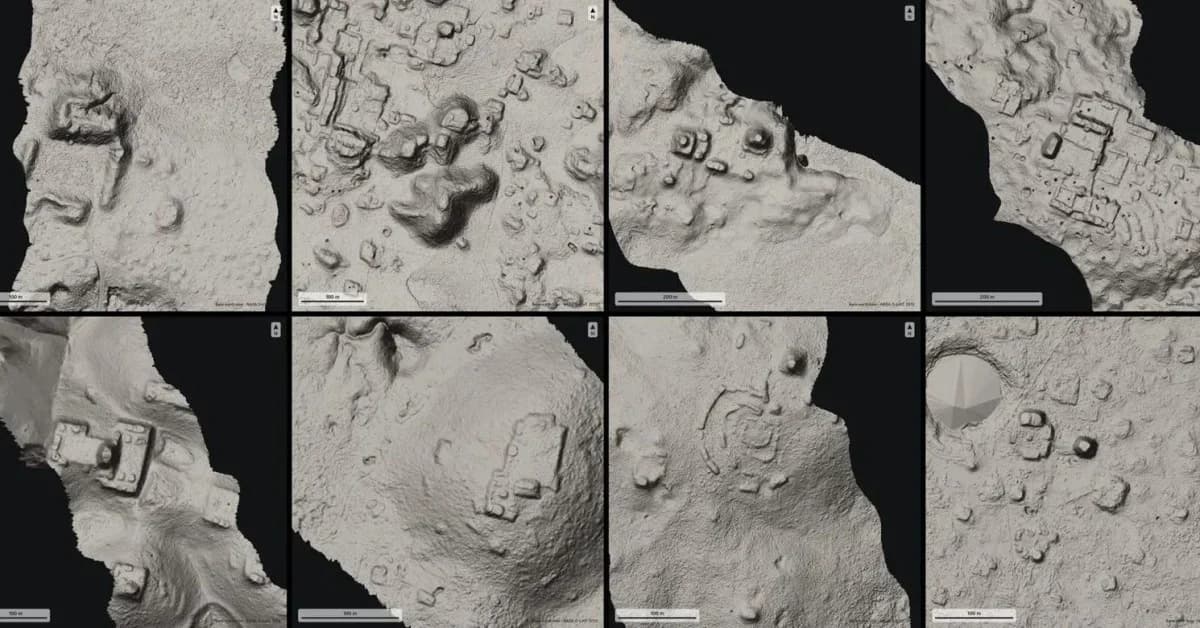
A Google researcher who said his AI agents had found an unmapped Maya settlement in Mexico was mistaken, as the site had already been documented in an academic journal last year, The Verge reports.
Pietro Miotti set 48 AI agents to work analyzing NASA lidar data. After the agents flagged what appeared to be a large, unrecorded village, he contacted Mexico's National Institute of Anthropology and History (INAH), which told him there was no registered site at that location. Miotti said the project was personal and did not use Google's resources.
Archaeologists criticized the claim on social media. Sarah Parcak, a professor at the University of Alabama, pointed out that a site missing from a government database is not the same as an unknown site. Ivan Šprajc, a co-author of the paper that documented the settlement, said that simply spotting something adds little to our knowledge and warned that circulating coordinates could attract looters.
Miotti acknowledged the error, updated his blog post and credited the archaeologists' work. He said it is difficult for AI agents to match locations against published research because archaeologists do not release site coordinates.
Elizabeth Graham, a professor at University College London, said the real challenge in the field is not finding new sites but a lack of funding for excavation and mapping. The episode highlights a broader concern about AI tools producing apparent scientific discoveries without accounting for existing research.
Source: The Verge
Next story